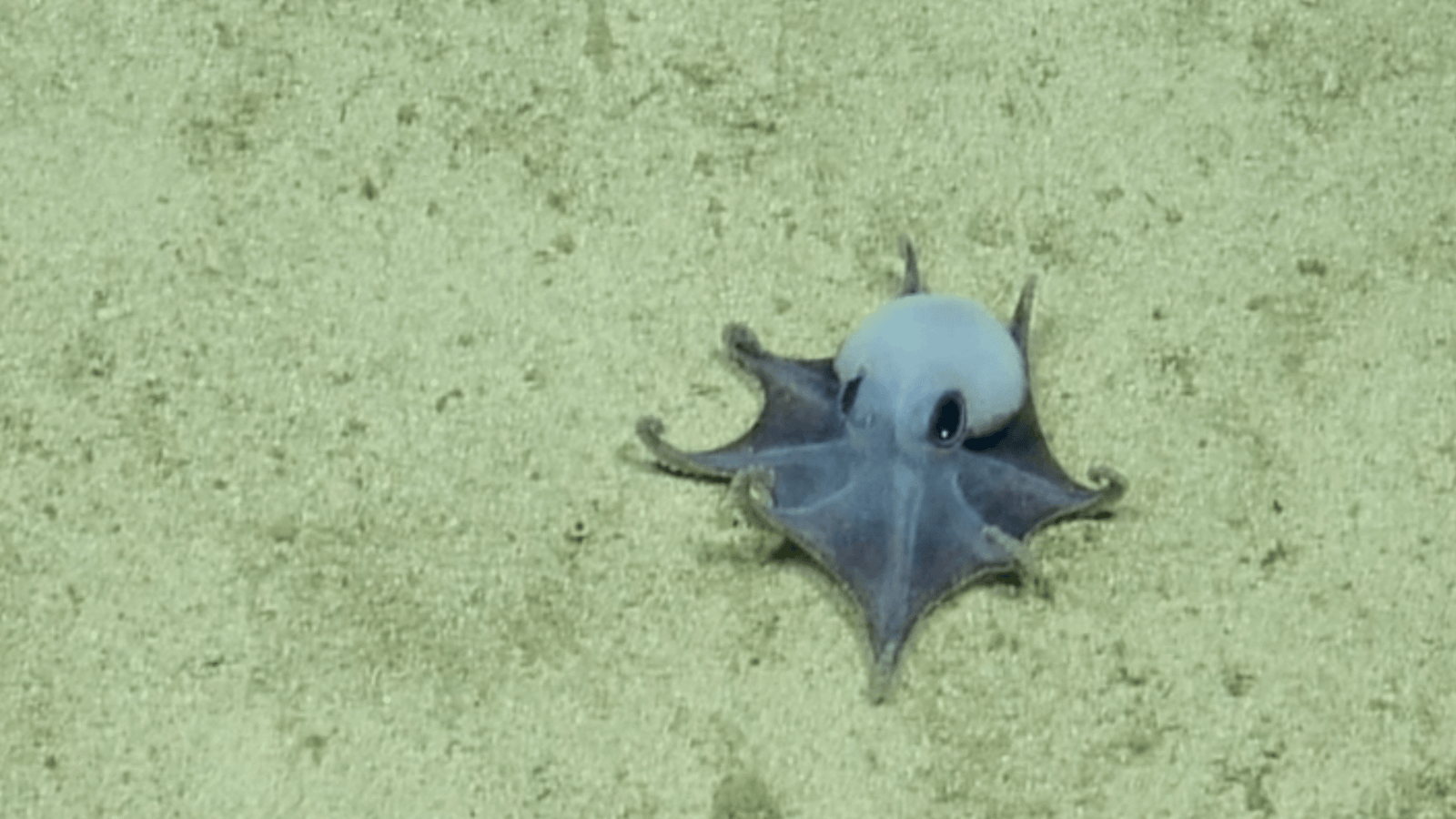
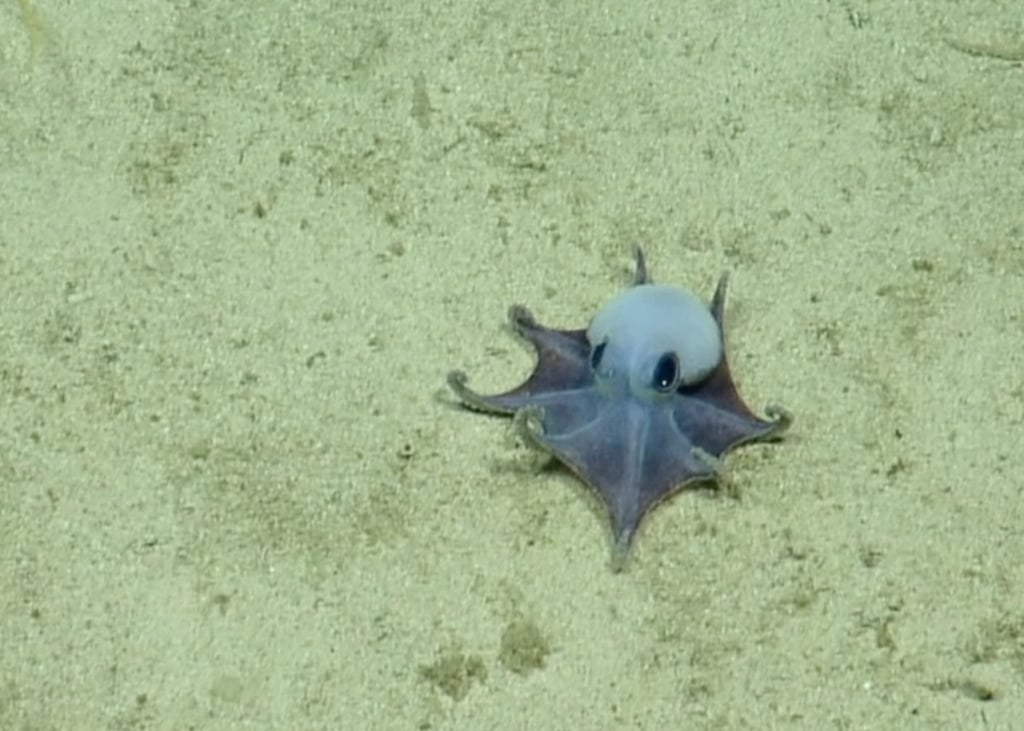
“The were trying to come up with the species list it belonged to and contacted me,” Voight says. “I went through the photos and saw this one and it was like, ‘Wow, that is totally special.’”
Special enough that Voight requested the research station ship her the specimen so she could get a look at its innards—not with a scalpel and a microscope, but with a CT scanner, a system that the Field Museum had only recently set up. From the photo alone, the octopus appeared to belong to the genus Thaumelodone, a variety of small, squat octopus found in the deep waters of the southern hemisphere. That was just a guess, however, and Voight was anxious to see the specimen up close so she could make sure.
“It came down to really looking at the guts fully,” says Voight.
It took five years for the research station to agree to send the sample to Chicago and it wasn’t until 2022 that Voight at last got it on the CT scan table. At first, there was evidence that the animal was indeed part of the Thaumelodone genus. It had a zigzag pattern of suckers on its arms, which is a distinctly Thaumelodone feature. It also had no ink sac—consistent with a Thaumelodone, since in the darkness of the deep ocean, predators can’t see their prey anyway, so a defensive cloud of ink serves no protective function.