How the World Cup spending boom is also an opportunity for income investors
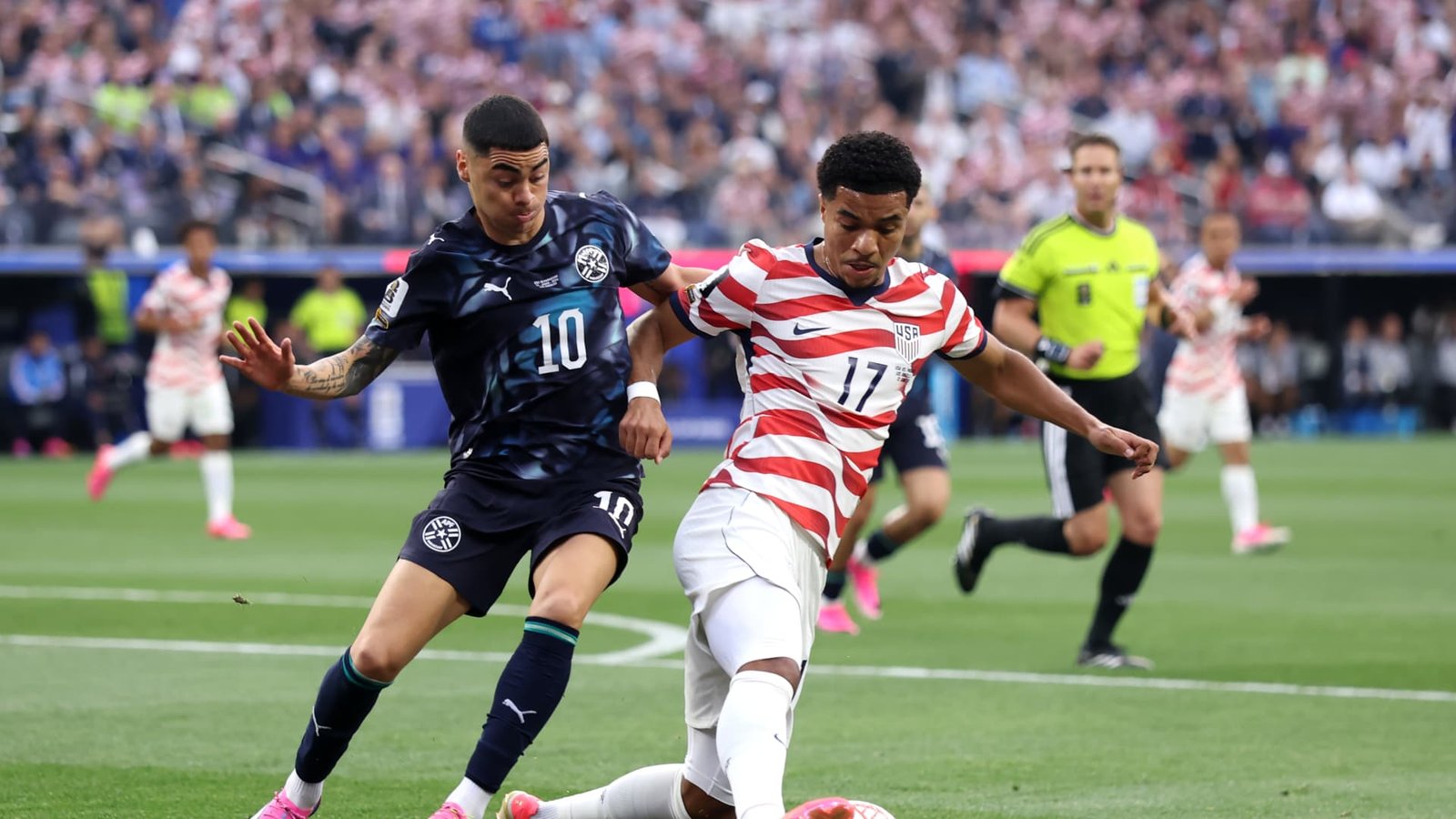
Malik Tillman #17 of the United States is challenged by Miguel Almiron #10 of Paraguay during the FIFA World Cup 2026 Group D match between USA and Paraguay at Los Angeles Stadium on June 12, 2026 in Los Angeles, California.
Dean Mouhtaropoulos | Getty Images Sport | Getty Images
As millions of soccer fans descend on stadiums in the United States for the World Cup to cheer on their teams, few are thinking about the makeovers the host cities underwent to handle the crowds. Most of those were financed with the help of municipal bonds.
The U.S. is hosting 78 games across 11 cities, which started Friday and run through mid-July. Federal funding helped the cities prepare for the big event, but much of the capital investment required will be funded by cities and states — and that is where municipal bonds come in, Dan Close, head of municipals at Nuveen, said in a recent report.
Yet while events like the Olympics used munis to fund projects that weren’t used beyond the specific games, the World Cup investments will have a longer lasting impact, Close said in an interview with CNBC.
“Cities did not waste this opportunity from the World Cup,” Close said in an interview with CNBC. “They used it as a catalyst, or an excuse, to really do long delayed infrastructure projects that they’ve meaning to do.”
The municipal bond proceeds from the host cities are tied to four infrastructure categories: transit and ground transportation improvements, airport upgrades, convention and broadcast infrastructure, and urban connectivity and community infrastructure projects, he noted.
For instance, Houston used munis to finance an airport expansion and Seattle extended its light rail. Dallas renovated its Kay Bailey Hutchison Convention Center, which is housing the International Broadcast Center for the games. The Massachusetts Bay Transportation Authority installed a new platform outside Boston’s Gillette Stadium for its commuter rail lines, while Kansas City funded street, sidewalk and bridge projects with munis.
“Issuers that have incorporated World Cup projects into broader, multi-year capital programs — rather than treating them as isolated event-driven expenditures — are generally better positioned to maintain strong ratings and market access over time,” Close wrote in his report.
All of the bonds tied to the World Cup are very high quality, he noted.
How to invest
People make their way through Terminal A at George Bush Intercontinental Airport ahead of the FIFA World Cup in Houston, Tuesday, June 9, 2026.
Houston Chronicle/hearst Newspapers | Hearst Newspapers | Getty Images
While the muni bonds tied to the World Cup have already been issued, there are plenty of opportunities to pick them up in the secondary market.
That allows investors to have greater certainty about the allocation they’ll get, said Close, who often buys on the secondary market.
“You don’t have the new issue spread compression that you often see in the primary market,” he said. “The certainty of execution, the block size, the ability to execute at known levels, I think, does provide some good opportunities.”
Investors should pay close attention to the bond structure, since the transactions span a range of security pledges, he said. Some are general obligation bonds, which are backed by the government’s credit and taxes and don’t depend on revenue from a specific project. Others are revenue bonds, which pay bondholders from the revenue from the funded project.
“Each structure carries a distinct risk profile, and understanding the stability of the underlying revenue source is essential to evaluating credit quality,” Close explained.
Close particularly likes the risk/reward on the munis that funded the Houston airport expansion. Airport bonds “tend to be a little bit lower rated, but still very good sources of repayment, he said.
A number of these bonds are held in several of the firm’s funds, including the Nuveen All-American Muni Bond Fund, Nuveen High Yield Municipal Bond Fund and Nuveen Intermediate Duration Municipal Bond Fund.

Nuveen All-American Municipal Bond Fund year to date
The firm also holds munis from the Massachusetts Bay Transportation Authority in its Nuveen Massachusetts Municipal Bond Fund.
Meanwhile, Dallas received a bridge loan in 2025 to advance the renovation of its convention, which was already underway before it was selected to be the World Cup’s broadcast hub. The city plans to retire the interim financing through roughly $2.2 billion in long-term revenue bonds later this year, Close noted.
“As far as future opportunities go, we do like convention center bonds because their repayment is from hotel occupancy taxes,” he said. “It’s a more narrow revenue stream, but you get paid for it, and we think that the additional spread that you should be getting from the debt that’s going to be issued for the Dallas Convention Center should be a fairly good risk-adjusted return profile for investors.”