In an interview with NBC on Friday, U.S. Secretary of State Marco Rubio said the use of force doesn’t appear to be China’s method of choice when it comes to Taiwan. “China’s preference is probably to have Taiwan willingly, voluntarily join them in a perfect world. What they would want is some vote or a referendum in Taiwan that agrees to fold in,” Rubio said.
Still, Rubio added that the rapid growth of the Chinese military demonstrates the country’s “ambitions to ultimately be able to project power globally the way the U.S. does now.”
China has “been trying to avoid direct confrontation, but they have been trying to add pressure, they’ve been trying to coerce,” Chong says. “Those sorts of mechanisms are also open to miscalculation,” and could still end up escalating into a direct confrontation.
U.S.-China competition heats up
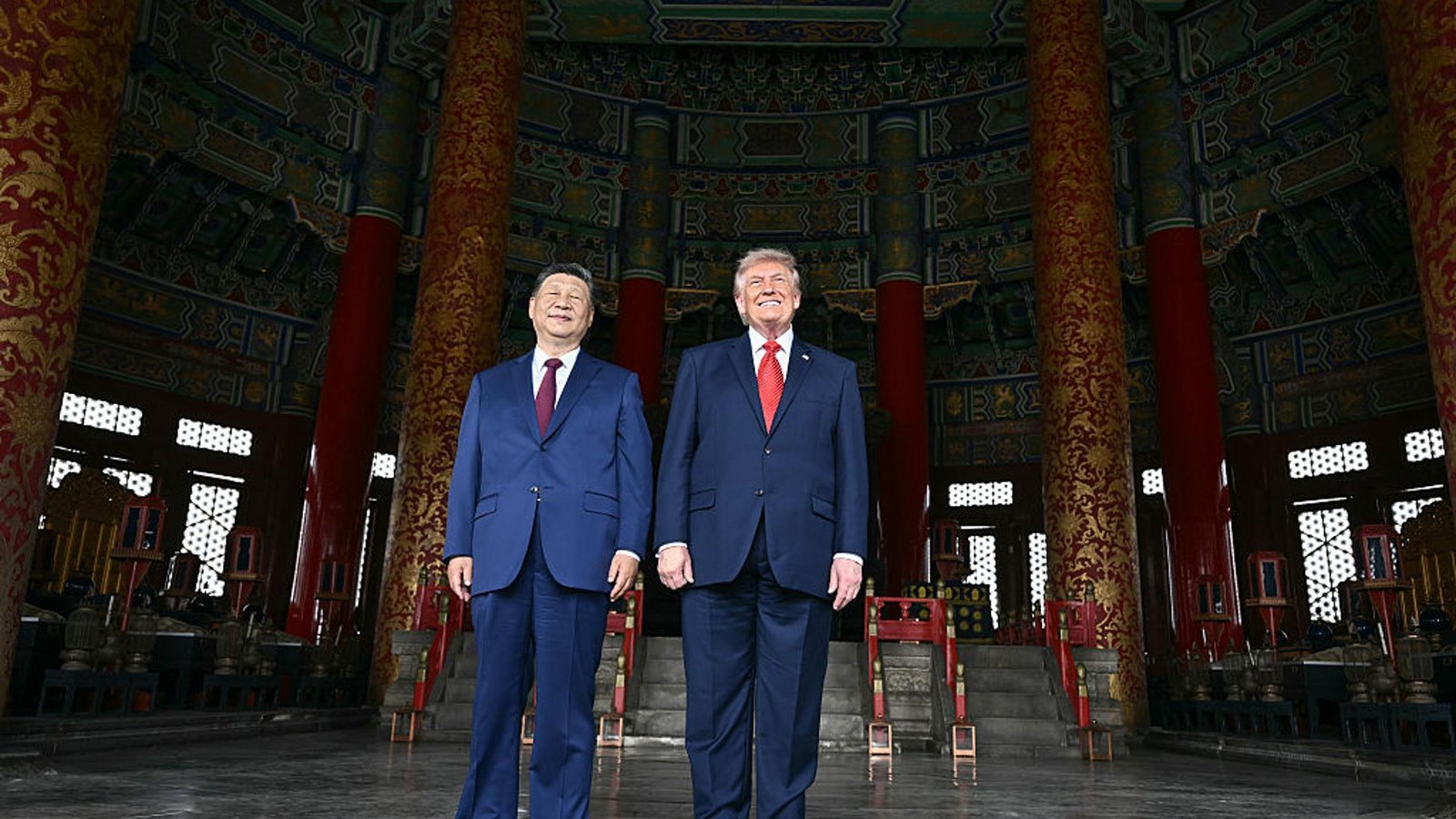
While Trump and Xi were all smiles this week, the Trump Administration has recently levied accusations of A.I. theft and spying by Chinese firms. An internal White House memo said the Administration had new information suggesting that “foreign entities, principally based in China,” were exploiting U.S. firms by “distilling” or copying U.S.-developed A.I. technologies. A spokesperson for China’s U.S. embassy said China’s A.I. development was “the result of its own dedication and effort as well as international cooperation.”