The man who built the tool that’s rewriting how software gets made hasn’t touched a keyboard to write code in the better part of a year.
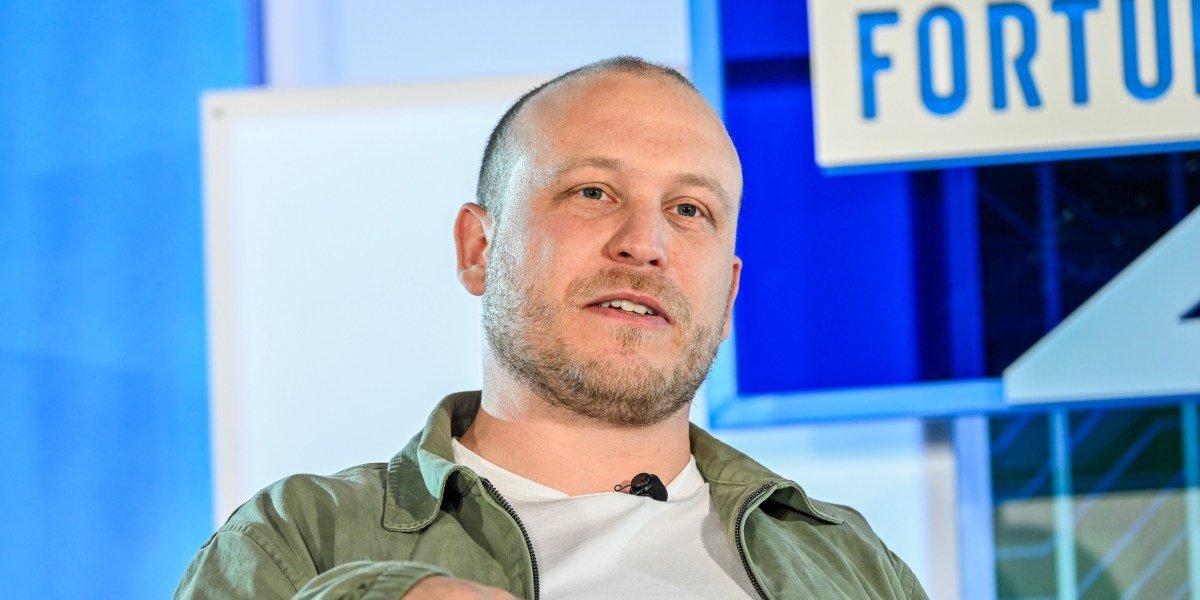
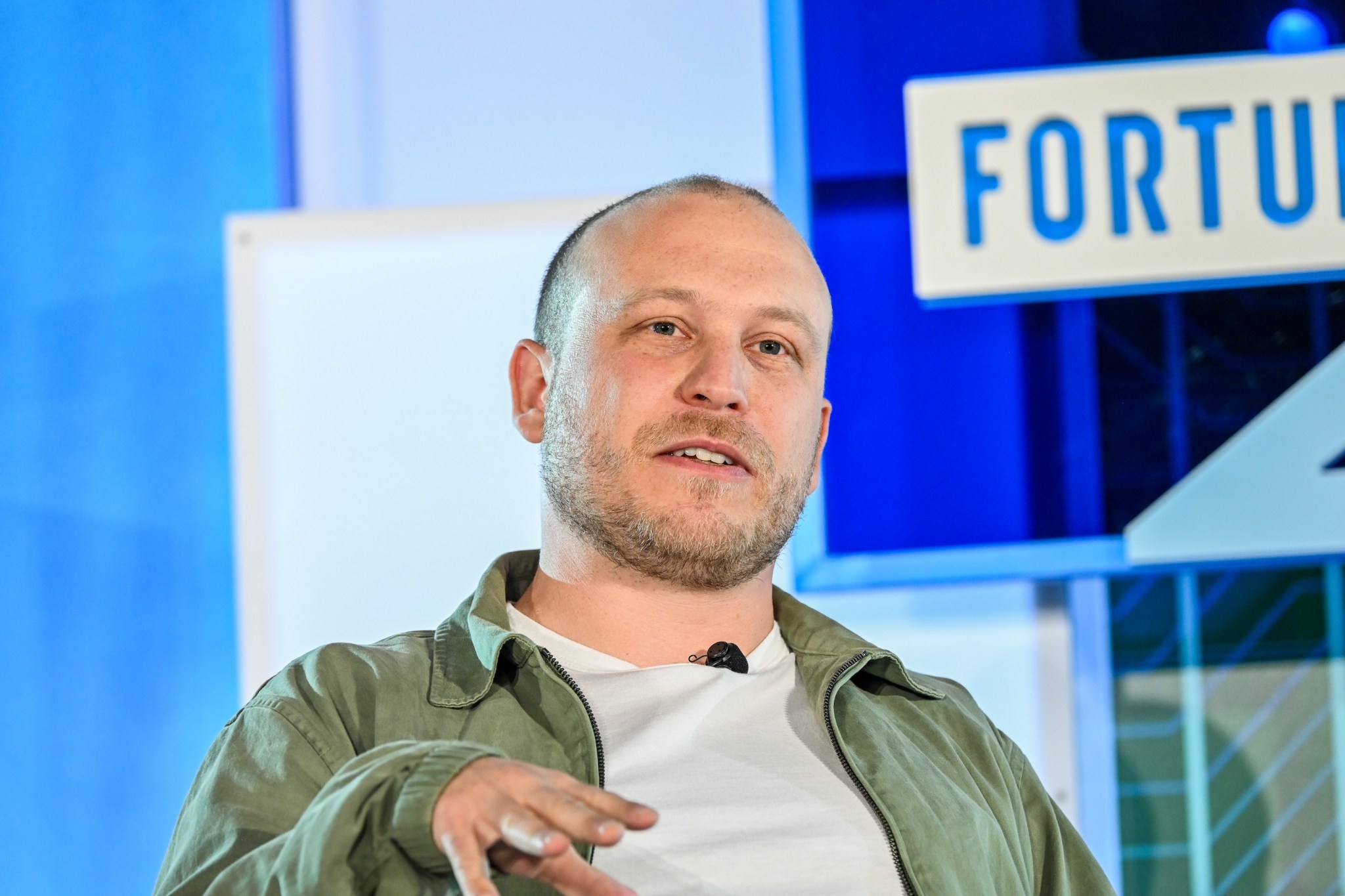
Boris Cherny, the head of Claude Code at Anthropic, dropped the detail almost in passing during a fireside chat at the Fortune Brainstorm Tech conference. “I haven’t written a line of code by hand in, I think, eight months now,” he told Fortune AI editor Jeremy Kahn: “Claude Code, 100% written by Claude Code,” he said. He added that Anthropic’s biggest enterprise customers — Salesforce, NASA, Y Combinator startups — are trending in the same direction.
This is the reality taking shape inside what may be the closest thing the tech industry has to a fully agentic organization. And if Cherny is right about where it’s heading, the implications stretch far beyond Silicon Valley.
The Gutenberg moment
Cherny reached for a 500-year-old metaphor to explain what’s happening. Before Gutenberg’s printing press in the 1440s, European literacy hovered around 10%. Reading and writing were professional skills, the province of scribes employed by lords and kings. The press didn’t just make books cheaper — it reduced the cost by 100x and triggered an explosion of published literature that exceeded the previous thousand years in just five decades.
“What happened was just insane, and something that no one could have expected,” he said. It took a couple hundred years, he noted, for education systems to evolve with the explosion in literature, “but global literacy went up.” The Renaissance, the Reformation and the Industrial Revolution wouldn’t have happened without this unlock, he argued.
“Claude Code is democratizing people’s ability to write software,” he said. “What does it mean if, you know, in the past there were 50 million people in the world that could code, and now everyone in this room can code?”
The analogy is imperfect — he acknowledged, noting that the printing press also toppled ideologies and unleashed devastating religious wars — but the underlying metaphor of software as the literacy of the digital economy holds. The people who could write it shaped the institutions, products, and power structures of the last 40 years. What happens when that barrier falls?
Managing hundreds of agents before breakfast
The morning of the talk, Cherny said, he had been managing a few hundred AI agents. Some days, he said, it’s thousands or tens of thousands. For most executives still wrestling with how to get a single chatbot deployment to work reliably, the number sounds like science fiction. But Cherny described a structure that’s becoming the new normal inside Anthropic: Claude Code doesn’t just respond to human prompts — it orchestrates sub-agents that are themselves Claude instances. Human prompting, he noted, is increasingly the exception. “If you look at most Claude Code sessions, it’s actually another Claude that does the prompting.”
Anthropic recently launched what it calls dynamic workflows, designed to scale this architecture further — enabling massive parallel tasks such as full codebase migrations or iterative security profiling that would previously have required large engineering teams and months of work. Case in point: developer Jared Sumner recently rewrote the Bun JavaScript runtime from Zig to Rust using Opus 4.8 and dynamic workflows. Cherny claimed that the estimated timeline with a human engineering team would be roughly a year, but Sumner’s actual time was six days.
The bottleneck migration problem
One of the more practically useful insights Cherny shared is what he called a bottleneck migration problem — and it’s something any executive deploying AI at scale will eventually run into. Automate one stage of a process, and you don’t eliminate friction; you move it. At Anthropic, the sequence has played out like this:
- Code writing was the first bottleneck. Claude Code eliminated it.
- Code review became the new constraint. Anthropic’s solution: a team of Claude instances with distinct personas that collaborate to review pull requests, catching “pretty much every bug” through what Cherny describes as expensive but thorough token-heavy computation. A human still approves, but Claude does the review.
- Maintainability and security emerged next. Anthropic now runs automated Claude-driven routines that iteratively improve the codebase, as well as a Claude Security product that scans for vulnerabilities on a rolling schedule.
“Find the bottleneck, solve the bottleneck,” Cherny said. “And anytime you have to do a task, build a skill that will solve similar tasks in the future.”
The ROI question every CFO is asking
For enterprise buyers getting sticker shock from token costs, Cherny offered a simple but significant reframing: stop comparing Claude Code to your $20-a-month coding assistant. Compare it to what an engineer would have cost to do the same work.
“That’s the benchmark,” he said. The Bun rewrite is his Exhibit A. He also recommended internal “shootouts” — give one team Claude Code, withhold it from another, and measure delivery speed, security, and polish. The data, he argues, builds the ROI case faster than any vendor pitch.
Perhaps the most striking moment of the conversation came when Cherny was asked about recursive self-improvement — Anthropic’s own recent blog post flagged the company’s code output has grown roughly 8x compared to the 2021-2025 baseline, largely because Claude is writing Claude. He described Claude Code as potentially “the first product that actually just takes off” because it’s fully writing, reviewing, and security-scanning itself, and is beginning to generate its own feature ideas by scanning GitHub issues, Twitter, and Slack.
“Many mornings I wake up, and Claude already has pull requests that it came up with, verified end to end, it has screenshots for me,” he said.
When asked whether he was worried about how fast this is moving, he answered without hesitation: “Yes … It’s one of the big risks for AI.”
Still, Anthropic’s blog post cautioned that 8x productivity jump was “almost certainly an overstatement” because measuring lines of code rewards volume, not quality. To return to the Jared Sumner example, that compelling anecdote should also be treated with extreme caution as business strategy, as Sumner is an elite developer working on an open-source project he created and knows more intimately than anyone else on the planet, making him the best possible human in the loop to ensure that the vibe coding was successful.
Cherny noted that even Anthropic’s expensive “team of Claudes” code review approach catches “pretty much every bug.” To paraphrase a favorite phrase of Claude’s, pretty much is doing a lot of work in that sentence.
Perhaps the most underexplored thread in Cherny’s talk came from an audience member, not from the stage: when employees stop asking colleagues where the codebase is, when new engineers never need to meet their manager to get unstuck, what organizational tissue quietly dies?
Cherny’s answer was honest and revealing: “This is something I’ve actually heard from new engineers on the team, that because they’re talking to Claude so much, they don’t get a chance to meet the team as much.” He said Anthropic has started to “consciously” encourage “peer programming, so you don’t just pair with Claude, but you also sit there, maybe with another engineer on our team.” They do a lot of “social time,” he said, “because in this environment where we’re actually wrong and our guesses are incorrect a lot, you have to feel very safe being wrong.”
For this story, Fortune journalists used generative AI as a research tool. An editor verified the accuracy of the information before publishing.